%20copy%202.png)
Private Practice Business Consultation For Therapists
Search this site
40 results found with an empty search
- Happy 1st Birthday, Making Waves!
Making Waves Counseling and Wellness, PLLC, opened it's doors exactly a year ago today. We cant believe it either. Our owner started Making Waves Counseling and Wellness in just 30 short days all on her own. The name of Making Waves was carefully curated by the owner and her sister. They landed on Making Waves due to the owners love for the beach and her ties to the Coastal area. The term 'Making Waves' is an old sailor saying for "creating a significant impression' or 'rocking the boat'. The owner wanted something that resonated with her deeply and gave her a connection to her brand/business. Thus, Making Waves Counseling and Wellness was born. This website originally started out years ago as a blog when the owner worked for other private practices. It served as a place for her to put her thoughts without fear of judgement or fear of trying to be changed. The original name was Waypoint. A waypoint is a point on a map and often gives us a sense of direction. Waypoints are often used as nautical points on a map to help with sailing so you have an idea of where you are going. The owner meshed the two together and you can read more here about our name origin story. Making Waves started out in a small room with not 1 window but our owner was not picky, she was just happy to have a space to call her own. Eventually, she moved into a bigger space with a private balcony and was able to provide a quality experience for her clients. Our owner also started a podcast on Spotify called 'Thoughts from your Therapist'. This podcast was also another place for her to put her thoughts about life, work, being a therapist and also just being a human. Life can be hard and we should not have to navigate it alone. Our owner can also be seen on TIK TOK as a content creator.
- Part 1: It's A Hardback Life (Therapy Book Recommendations)
A therapy book recommendation series by your therapist, Kara Tolman! As a therapist, I am often finding new books or workbooks that can help my clients. I tend to keep a stack underneath a table that my clients can see while sitting on the couch. I read or find these books with my clients in mind or was tasked with reading them as a student. Here are 5 books/workbooks that I recommend! The Attachment Theory Workbook: Powerful Tools to Promote Understanding, Increase Stability & Build Lasting Relationships Annie Chen, LMFT When working with clients, I am always digging deep into attachment styles. Attachment styles are created in childhood with our main caregivers but deeply affects our ability to maintain healthy relationships. This topic often comes up with couples, new moms, and those who find they want to beef up their toolbox around their romantic partners. I like this book because it has six unique chapters that goes into each attachment style as well as some resources, blank worksheets, and some assessments. If you want to learn more about this book or attachment styles, you can read my other blog post about attachment styles 101 or click on the amazon link. I'm Glad My Mom Died Jennette McCurdy The first time I read this book, someone said, "Wow, that's an interesting title". This book was very hyped last year (2023) due to Jennette McCurdy's story around her eating disorder, struggles with addiction, growing up in Hollywood, and abuse she experienced while being a child star. She talks about her experiences of life as a child actor and how toxic it can be for individuals, not only children. I highly recommend this book if you are looking for a pool or beach read. 8 Keys to Recovery From an Eating Disorder Workbook Carolyn Costin & Gwen Schubert Grabb This workbook has strategies written by a therapist and a former client. In this workbook, you will find food journals, exercises, personal experiences, and goal sheets around recovery for an eating disorder. I am a nerd for a good workbook and this is one I often refer too but if you are looking for more of a true book, I would also recommend the book: Life Without Ed: How one woman declared her independence from her eating disorder and how you can too Start With Why Simon Sinek Before I was a licensed therapist, I worked a lot with the Special Operations community and this was one of the books we often provided our clients with. As a Master's Level Social Worker, I spent a lot of time side by side with service members as they identified what their life may look like outside of the military. During active service, their 'why' was already provided for them and they often defended their 'why' while actively doing their jobs. The hardest question for them to answer was, what is your why in life outside of active service? This book is great not only for individuals going through major life transitions but for individuals who own their small business. Last but not least.... (drum roll, please). The Girls Come Marching Home: Stories of Women Warriors Returning From the War in Iraq Kirsten Holmstedt During my undergraduate experience, I had the ability to take a military social work class. This class was actually taught by a professor who was currently stationed over seas with her significant other at the time. In this class, we were tasked with reading exerts out of his book and it was life changing. In this book, the author describes how female Sailors, Airmen, Marines, and Soldiers are affected by their fight on the front lines. This book even has pictures included and talks about the emotional and psychological effects war has on these individuals. Trigger Warning: MST
- Help! I feel like I am too attached, what is my attachment style?
How attached are you and where do you land on the spectrum of attachment styles? As a therapist, I spend a lot of time with people who are usually navigating some sort of interpersonal problem. What do I mean when I say interpersonal? Interpersonal is just a fancy therapeutic word for "relationships or communication between 2 people". Interpersonal issues revolves around creating and maintaining health relationships. One of my favorite things to talk about in session are my client's specific attachment style's and how it affects their ability to connect with others in a meaningful and healthy way. Attachment theory states that children need at least 1 primary caregiver to form "normal" social and emotional development. I put normal in quotes because normal is truly defined by you as an individual and not what google says. What we know is that attachment styles greatly affect our romantic relationships throughout our lives and do not be fooled, we all have one, even me! Attachment styles are broken into 2 categories; Secure and Insecure. Below you can see a chart indicating the different characteristics of each style. If you are interested in learning more about your attachment style, I highly recommend the book: The Attachment Theory Workbook by Annie Chen, LMFT.
- I booked an intake.. What now?
Great job! We are so proud that you took that next step to book an intake. If you are a first timer with therapy, you may be asking yourself what this even looks like. At Making Waves, we try to make the intake process as seamless and easy for our new clients as possible. You may notice some anxious feelings or sensations going into your first visit. We will give you an inside look on what you may be doing during your initial intake visit as well as your consultation. Free 15 Minute Consultation We love offering free 15 minute consultations with prospective clients. We believe it allows the client and therapist to interact with no strings attached. Often times, new clients feel pressured to do intakes immediately, which can lead to feelings of anxiousness that can sometimes deter them from getting the services they need. In order to bridge this gap, we believe free 15 minute consultations can be incredibly helpful. During this time, you are able to ask your potential therapist questions, provide them an overview of symptomology and what sort of goals you want to work on. This will ensure the therapist is practicing within her scope and empowers the client to have collaboration in his/her care. Here are some things you may see during your consultation visit with Making Waves Counseling and Wellness. Introductions Inquiring about where the client is located and if they are interested in telehealth/in person Inquiring on insurance or preferred payment method Inquiring on preferred dates/times for potential future sessions (This ensures we are able to provide you with what you need before diving into the deep stuff!) Learning about clients needs, symptoms and potential goals for therapy Answering any questions the client may have about therapist and practice. These questions could look like: - What type of modalities do you use? - Do you have experience working with individuals who have my symptoms? - Where is your practice located? - What is your no show/late cancellation policy? - Do you take my type of insurance or accept sliding scale? Once the clinician has answered any questions you may have, she may suggest booking an intake. Once the intake is booked, she would then send you important paperwork via email such as procedures/policies, insurance forms, demographics forms, etc. I booked an intake.. Now what? Great question! Intakes are really tailored to each clinician for each individual practice. We take pride in being thorough in our practice and do our best to gain as much information as the client is comfortable in providing. Intakes at Making Waves usually ranges from presenting problem all the way to goal building. We mark 53-60 minute sessions for intakes to ensure we get all of the information we need. Assessments Prior to intake, your clinician will send you the following questionnaires to help assess for different diagnoses. These assessments include: ACE (Adverse Childhood Experiences)- The ACE is a 10 question assessment that looks at abuse, neglect and family dysfunction. PCL-5- The PCL-5 is a 20 item questionnaire, corresponding to the DSM-5 criteria for PTSD. GAD7 (Generalized Anxiety Disorder)- A self reported questionnaire for screening and severity measuring of Generalized Anxiety Disorder. PHQ9 (Patient Depression Questionnaire)- This assessment objectifies and assesses degree of depression severity. Standard Intake- This is a standard intake that allows the client to input their presenting problem, previous medical/mental health provider information, etc. During the intake.. During the intake, the clinician will review the assessments with you and ask any additional questions she may have. At Making Waves, safety is our number 1 priority. We will always educate our clients on passive and active suicidal ideations as well as creating an effective safety plan, if needed. We will assess for mental wellness by asking you to remember a few things and asking you to orient yourself in front of us. This may look like stating your name, stating your location and why you are there. Intake questions you may be asked include: Presenting problem Triggers Family function Client identification Goals Current coping skills Prior mental health hospitalizations/providers Legal questions Trauma history Social History And so much more... We always try to end our sessions on a positive note which includes asking the client about their strengths! We love to hear about all the good things our clients are currently doing in their lives. If you are interested in booking an intake or 15 minute consultation today, please reach out at 910.541.8928.
- How to increase happiness
“Studies show that 50% of individual differences in happiness are determined by genes, 10% by life circumstances, and 40% by our intentional activities. Most of us aren’t flourishing. Nationally representative samples of U.S. adults indicate that slightly more than half of us (54%) are “moderately mentally healthy yet not flourishing – that is, we lack great enthusiasm for life and are not actively and productively engaged with the world” (Lyubomirsky, Sonja). Happiness can look and feel differently to everybody. Happiness can translate into contentment, satisfaction, pleasure, and joy but how often do you experience these emotions? Often individuals can feel stuck or unhappy in their daily lives due to relationship conflict, emotional distress, work issues, and so much more. Interested in seeing what types of activities will bring you the most bang for your buck? Take the Person-Activity Diagnostic Here are some quick tips for increasing happiness in your everyday life: · Finding a community and sense of belonging · Practicing gratitude and self-compassion · Increasing positive self-talk and thinking by not ruminating · Mindfulness and staying in the present moment · Setting goals that align with your personal values · Slow and active movement to stimulate your brain (Yoga, walking, meditation, etc) · Get plenty of sleep · Acknowledge the unhappy moments & practice letting the emotions move through you If you are interested in learning more about The How to Happiness, check out Sonja Lyubomirsky’s book by clicking on the book
- Quick Tips for Increasing Motivation
As I sit here and write a blog on motivation, I think about how it is has been difficult for myself to also find the motivation to write. So, I decided, why not write a blog about it? Motivation is one of the driving forces behind human behavior. It increases our desire to be socially connected and when absent can lead to mental illness such as depression. Motivation encompasses the desire to continue striving toward meaning, purpose, and a life worth living. Motivation is often sourced extrinsically and intrinsically. Extrinsic Motivation is inspired by outside forces, for example: · Completing coursework for grades · Completing work for money · Helping others for praise · Volunteering because it looks good on a resume Intrinsic Motivation is inspired by internal forces, for example: · Completing coursework because it makes you feel accomplished · Going to work because you feel fulfilled · Learning a new language to experience new things · Participating in helping others because it makes you feel good Maslow’s Hierarchy of Needs Building momentum to want to be motivated towards your goals can be difficult especially if you are battling depression. Maslow’s Hierarchy of Needs shows that we are always working towards self-actualization. Self-actualization, in psychology, is the concept regarding the process by which an individual reaches his or her full potential. Maslow stated that for one to reach self-actualization we must have our basic and social needs met. Those levels, ultimately in Maslow’s eyes, heavily influence our sense of belonging and purpose. Maslow stated that people are motivated to achieve certain needs and that some needs take precedence over others. Our most basic need is for physical survival, and this will be the first thing that motivates our behavior. Once that level is fulfilled the next level up is what motivates us, and so on. 1. Physiological needs is the first level in Maslow’s pyramid which includes the biological requirements for human survival (food, shelter, sleep, warmth, etc). 2. Safety needs is the second level in Maslow’s pyramid which include emotional security and financial security. 3. Love and belongingness needs is the third level of Maslow’s pyramid which include emotional connection, being apart of a group, and belonging. 4. Esteem needs is the fourth level of Maslow’s pyramid which include self-worth, accomplishment, and respect. 5. Self- actualization is the fifth level of Maslow’s pyramid which includes realization of potential, self-fulfillment, and seeking personal growth. Tips on kickstarting motivation once your needs from Maslow's Hierarchy have been met: · Breaking tasks down into small ones. · Set a small achievable goal that aligns with your beliefs and values system. · Increase positive self-talk. · Try behavioral activation in therapy. · Give yourself grace and compassion. · Work on fulfilling your basic needs. · Doing things that make you happy.
- Taming the inner critic
We all aspire to be the best versions of ourselves but what happens when our inner critic takes over? When we become self-critical, we begin to overanalyze our own behaviors in that a way that devalues our overall sense of self. In therapy, we often spend time creating awareness around problematic thoughts or behaviors to insinuate change. We can all be critical of ourselves from time to time which often influences our negative self-talk. We have all been there, right? Our inner dialogue can be calm, friendly, and encouraging but sometimes negative thoughts about ourselves sneak in. Psychology says we, as humans, have many sub personalities. These sub personalities are parts of us that form in a response to various experiences we have had in our lives. Think of sub personalities as parts of ourselves that make us up. During times of need, each sub personality comes out to protect or guide us during tough times. Each sub personality has its own set of values, thoughts, feelings, and behaviors but which ever one we resonate with the most is the one that shines through us every day. You may be asking yourself, what do sub personalities and our inner critic have in common? Your inner critic makes up one of those personalities. Individuals who are overly self-critical may: 1. Blame themselves for everything even if it is not their fault 2. Often compare themselves to others 3. Have a difficult time accepting compliments 4. Often participate in black and white thinking 5. Avoid taking risks Taming the inner critic There are many ways to tame the inner critic. Here are a few techniques below: 1. Create awareness and catch your inner critic in the act. Notice what you are saying to yourself and when you start to become self-critical. 2. Thoughts are not always reality. Are you able to find tangible evidence to support this negative thought? Are you observing this thought and not considering all the facts? 3. Name the inner critic. When you name your inner critic, it helps the critic lose power which helps us acknowledge that we are not the problem. 4. Practice acceptance of self. Learn to embrace who you are and support the inner dialogues that empowers your sense of self and purpose.
- Tuning Inward: The issues are in your tissues (Holiday Edition)
Its Christmas Eve and you are spending that hour you normally get to yourself standing in line at Target for that one toy you really want to buy your nephew. The line is wrapped around the main aisle and you start to question, "is this worth it?". While standing in line, you are thinking about how this is the first time you have stood around this many people since COVID-19 started or how the amount of people around you feels like too much. Suddenly, it feels like the room in closing in and you have the urge to drop your 1 item while bolting out the door for fresh air. Sounds stressful right? The holidays can be incredibly stressful for many different reasons. According to a survey by the American Psychological Association, 38 percent of people said their stress level increases during the holidays. Why does holiday stress seem to wreak more havoc on our bodies and mind then everyday stress? We often know that everyday stress symptoms can be managed but they often do not completely disappear. Everyday stressors can include working long hours, caring for aging parents, paying the bills and so much more without adding the extra stress from the holidays. Navigating mental and physical health during the holidays can seem like an overwhelming task and can have long lasting effects on our mind and body. During times of high stress, such as the holidays, our brain signals to our endocrine system to produce cortisol hormones to help increase our energy throughout the day. In addition, our Central Nervous System, when signaled by the brain during high stress, works with your adrenal glands to release a hormone called adrenalin. When adrenalin and cortisol hormones are released in your body during stressful times, we often see fight or flight symptoms such as increase in heart rate, increase of glucose levels in the blood stream, and an increase in respiration. Research states we can become ‘stuck’ in fight or flight states which over time can negatively impact our mental health. Tuning into our body’s natural somatic response during the holiday season can help you manage stress levels in your body. When navigating stress, I often instruct my clients to ask themselves these 3 things: 1. What sensation in my body tells me that I am feeling this way? 2. What words can I use to describe these bodily sensations? 3. What emotion am I feeling? Then follow through with a physical comfort technique which aims to regulate your body responses and avert overriding your nervous system. 1. Find a comfortable place to sit or lie down. 2. Feel your feet on the floor and notice how they are being supported. 3. Feel your hands resting on your lap or on your belly. 4. Feel how your hands and arms are being supported. 5. Feel your back being supported by the chair. 6. Adjust your posture until you find yourself feeling completely comfortable. 7. Use your senses to connect with sensations around the room (colors, shapes, sounds, smell) 8. Use your internal senses to connect with a pleasant sensation with you. 9. Draw your attention to each of those sensations for a few moments at a time. 10. Notice the physical and emotional comfort they generate.
- Bath, Bed & Beyond
It is that time of year again where we move our clocks backwards and gain an extra hour of sleep but do we actually gain anything? Twice a year we move our clocks, but we feel that we lose more than actually gain. The original idea behind Day Light Savings time was to maximize sunlight in the Northern Hemisphere. As days start to get longer in the summer months, we shift our clocks forward to increase our available time. I know way more people that get excited for springing forward than moving back. Well, research shows that seasonal changes and sunlight has an affect on our mood/sleep patterns. Circadian Rhythm & DST Circadian rhythms are 24 hours cycles that make up the body’s internal clock and the most important circadian rhythm is our sleep-wake cycle. The main function of our Circadian rhythm is to make sure our body processes are optimized during various parts of our day. When your sleep-wake cycle is aligned with your circadian rhythm it allows for your mind/body to participate in restorative sleep but when it is thrown off (such as DST) it can wreak havoc on your regular sleeping patterns. Our Circadian rhythm utilizes light and darkness as signals to predict what to do in the future: go to sleep or go be active. It is imperative that you seek light during the day, after day light savings to help your body’s, natural rhythm get back on track. Ways you can increase your body’s natural internal clock: · Seek out sun: Seeking out natural sunlight during the day helps your body’s natural cue for going to bed. The sun also has powerful effects on our overall mood. If you work in an office during the day and are not able to leave, you can look into an artificial light resource or light therapy. Light therapy is a therapeutic intervention tool used for individuals who are diagnosed with Depression and Sleep Disorders. Artificial light differs from the light within an office setting or home as it mimics natural light that you would receive outside. If you are interested in artificial lights to have at your desk at work, you can follow the link below. · Avoid Caffeine: Stimulants like coffee and energy drinks are often our go to when we are feeling sleepy. Avoiding caffeine in the late afternoons can be helpful with increasing the natural sensations of wanting to fall asleep at night. · Get Daily Exercise: Participating in daily exercise can also help reset your bodies natural sleep cues as well as boost your mood. · Put Down Your Phone: Yes, you heard me. You will want to decrease the amount of blue light that your body encounters after the sun sets. Research says dimming the lights and resisting blue light can be helpful in assisting with better sleep. · Environment: Make sure your environment at night feels safe and comfortable for sleep. Try adjusting the temperature to 60-68 degrees to fall into REM sleep faster. · Routine: Try adding a pre sleep routine and see if it helps your body relax before bed. This may look like taking a bath or shower, putting on soft pajamas and only getting into bed when you feel ready to fall asleep. · Self-Compassion: Lastly, have compassion for yourself during these times. You may become frustrated but know that your body will adjust even if it takes time. The link above is for the light described in "seek out sun" bullet!
- Before there was self, there was the tribe.
To me, finding my tribe means finding a place where I feel as if I belong or am accepted. In life, we may find ourselves seeking community or human connection. We often do this by finding individuals who share the same common beliefs or values as us. We many even do this based off gender identity, sexual identity, career path, values, political affiliations, and more. Whatever we use to find our tribe is special to us, it may be all the things or just one but what happens when you are not able to find that tribe or feel like you do not belong to any? Social connections add meaning to our lives and decrease our risk for depression, anxiety, substance disorder, loneliness, and low self-esteem. Belonging is the feeling of security and support when there is a sense of acceptance, inclusion, and identity for a member of a certain group. It is when an individual can bring their authentic self to work. When employees feel like they do not belong at work, their performance and their personal lives suffer. Burnout in your professional life can be higher and can influence loneliness. Often, we find ourselves changing ourselves and conforming to the world around us to be accepted or to feel “free”. Being ourselves often means having the courage to stand alone, all alone. One thing you will learn from me is that I am a fan of Brene Brown. Brene Brown is a Texan Social Worker and avid researcher. If you have not watched any of her Ted talks, you should…. In her Netflix documentary, The Call to Courage, she often talks about the Man in the Arena Quote by Theodore Roosevelt. If you have not heard the quote, I will put it below. After watching this hour long special on #Netflix, I did a lot of self-reflection and thought about all the things she said that resonated with me. You can see them below: We often use other individuals’ vulnerabilities against them, especially the people we love the most. How can we accept love if we are not willing to be seen or heard? Vulnerability is the key to connection and our path back to others. Vulnerability is not about winning or losing. It is about having the courage to show up when you can’t control the outcome. If you are #vulnerable, you can get 3 things- love, joy and belonging. To love is to be vulnerable. To belong is to be our most honest and vulnerable self. Most people are scared to feel joy because they think something may come along and take it from them. In the middle of great things, we dress rehearse tragedy to protect ourselves. Now ask yourself, are you willing to be seen even if it means standing in the arena alone?
- Let’s replace “Why” with “What”
What happens to your body when someone asks you a question starting with “why?”. Do you tense up or automatically go into defense? In sessions, I try my best to steer clear of using the word “why” when asking questions unless it is to clarify a previous statement from my client or to gain clarity. According to Inc. Magazine, a former FBI Hostage Investigator reported that asking people “why” can make them go into defense and often feels more like an accusation than a true question. By starting conversations with ‘why’, it can send off signals of judgement, and indicate a lack of trust in our client’s own judgement. To be honest, the “why” is not so much important as the “what”. For all my parents out there, when was the last time you asked your kids this: · “Why are you doing that?” · “Why did you leave your clothes on the floor?” · “Why haven’t you done your homework?” Instead ask: · “I see that you have not done what I have asked. Is everything okay?” · “I see you have homework tonight. What can I do to make sure it gets done in a timely manner?” When you asked these questions, what type of answer did you get back? Were you met with defense behaviors and big emotions? When talking with others, especially in therapy, it is important to be clear in our communication with our clients to ensure we are coming from an unbiased stance. As a therapist, it is more important to understand what is driving my client’s problematic behavior then asking them “why” they are doing it. In most case scenarios, we do not understand why we do thing’s, and our clients are coming to us to gain tools so they can gain awareness or insight. Replacing “Why” with “What” When communicating with others, it is important to be intentional, clear, and concise. In session, I often use Socratic Questioning. Socratic questioning differs from standard questioning in that it is “systematic, disciplined, deep and usually focuses on fundamental concepts, principles, theories, issues or problems.” In other words, Socratic questioning was developed to get to the very core of a problem effectively and efficiently. In sessions, I often practice replacing “why” with “what”. For example, if a client is struggling with why they participate in a problem behavior, I will ask, “what about this behavior is problematic for you?” or “what do you believe drives this behavior?”. I have noticed throughout my practice that utilizing “what” helps individuals get to the core of the problem without unknowingly going into defense mode. This is also a strategy I use with my clients who participate in negative self-talk. When talking to yourself, try asking yourself “what drives this behavior?” instead of “why am I like this?”. You may be surprised at the response or insight you have after just simply changing one word! To see more mental health content, check out my social media pages below!
- Trauma: How your body keeps the score
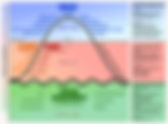
When you hear the word trauma, what is the first thing that comes to mind? Is it veterans or war? Is it Post Traumatic Stress Disorder? Trauma is the response to a deeply distressing or disturbing event that overwhelms an individual’s ability to cope, causes feelings of helplessness, diminishes their sense of self and their ability to feel a full range of emotions and experiences. Trauma has an incredibly unique way of dysregulating your bodies central nervous system. Your Central Nervous System (CNS) is comprised of the brain, cerebellum, and spinal cord. The Nervous System has 3 broad functions: sensory input, information processing, and motor output. When you have been affected by trauma, your body’s natural protective reaction is to fight, flight or freeze, which in return is controlled by your Central Nervous System. Three Nervous System Functions Fight & Flight (aka hyper-arousal): Our bodies natural fight or flight response refers to a psychological reaction that occurs when we are in the presence of something terrifying. The bodies natural reaction to threat is activated through your bodies parasympathetic nervous system which releases hormones from your adrenal glands called catecholamines (aka adrenaline). This response will create a chain of reactions within your body which will increase your heart rate, blood pressure and breathing rate. Did you know: After the initial threat is gone, it takes your body 20-60 minutes to return back to it pre-arousal state. Fight or flight state may look like this: A woman who was previously abused by her spouse, years later is walking through a parking lot to the grocery store when she hears a man and woman walking out of the store having a disagreement. Due to the woman’s past trauma history, she may begin to have physiological symptoms of stress which trigger her body’s natural reaction to threat. She has trouble breathing, an urge to run away and increased heart rate. For the next hour, she has a difficult time controlling her emotions, rationalizing, and even becomes frustrated easily. Freeze (aka our dorsal vagal state/hypo-arousal): Our bodies have a natural shut down state that has been tracked back to our primitive years. This natural shut down state is caused by such an intense threat that our bodies naturally shut down to preserve fuel and brain power to keep you alive. In this state, your body has surpassed the fight or flight stage and feels the only way to stay safe is to completely shut down. In some cases, animals are also affected by this stage called tonic immobility. Did you know: Tonic Immobility describes a state of involuntary paralysis in which individuals cannot move or in many cases speak. This reaction is called evolutionary adaptive defense in animals who are being attacked by predators and no other forms of defense are possible. Animals who utilize tonic immobility for safety include: Possums Rest & Digest (aka our ventral vagal state/baseline): Just like the other 2 states, our bodies have a state where we feel safe and what I like to call our “baseline”. This baseline is where you feel the most at peace, no threat, just happiness or joy. This state allows us to connect with others and be compassionate or to have empathy. The Window of Tolerance When an individual has experienced trauma, they experience bodily sensations that throw them outside their window of tolerance. The window of tolerance was developed by Dan Siegl, a clinical professor of psychiatry, who said the window of tolerance describes the best state of 'arousal' or stimulation in which we are able to function and thrive in everyday life. When your body and mind are functioning within the window of tolerance, you may find yourself thinking rationally or making decisions without feeling overwhelmed. As I describe to my clients, think of the window of tolerance as two parallel lines. Between these two parallel lines is when you feel the most at your so called “baseline” or homeostasis (aka rest & digest). You are functioning well, you are connecting with others, and you are feeling joy. When you are thrown outside of those parallel lines, your body is no longer functioning at a state that is calm or rational. If you go above the top line, your body is now functioning in a hyperarousal state (Aka fight or flight). If you go below the bottom line, your body is now functioning in a hypo-arousal state (Aka freeze). When stress or trauma shrink your window of tolerance or your rest & digest state, it does not take much to throw you off balance. You may feel yourself experiencing fight, flight or freeze more often than your natural baseline. No one wants to feel on edge all of the time and live in a state where their stress levels are at an all time high but there are ways to retrain your central nervous system to remain in that window of tolerance. Come back to learn more about how somatic experiencing can help your body get back to its natural baseline!